
The banking industry stands at an inflection point that occurs perhaps once in a generation. The convergence of large language models, agentic AI systems, real-time data infrastructure, and cloud-native architectures is creating an entirely new category of financial institution: the AI-native bank.
This is not incremental change. It is not the digitisation wave of the 2010s replayed with better algorithms. What we are witnessing is a fundamental restructuring of how banks create value, manage risk, serve customers, and compete.
AI Native Banking: A Playbook for Banks is our first major research report — a comprehensive guide for banking leadership teams navigating this transformation.
What this report covers
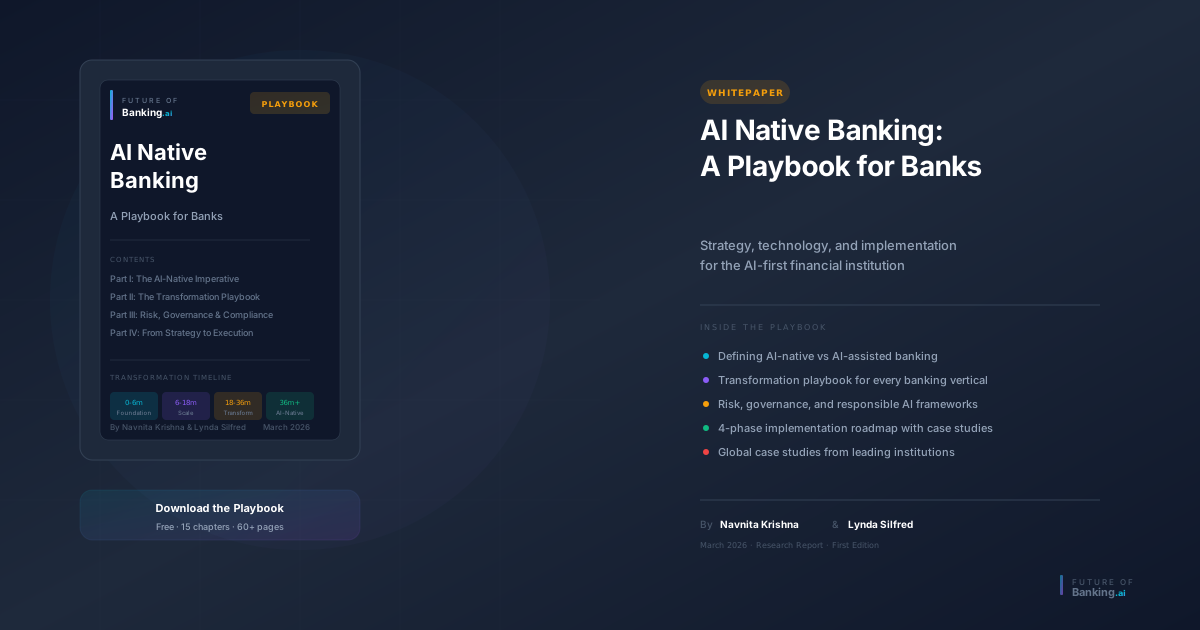
The playbook is structured in four parts, spanning 15 chapters across more than 60 pages of original research and analysis.
Part I: The AI-Native Imperative
We begin by defining what AI-native banking actually means — and why it is fundamentally different from simply adding AI features to existing banking systems. This section examines the market landscape, the forces driving change, and the technology foundations that make AI-native operations possible.
The distinction matters: an AI-assisted bank uses intelligence as an overlay. An AI-native bank treats intelligence as its core operating engine. That difference has profound implications for architecture, workforce design, competitive positioning, and long-term economics.
Part II: The Transformation Playbook
The largest section of the report provides a vertical-by-vertical transformation guide covering retail banking, commercial and corporate banking, wealth management and advisory, payments and transaction banking, and lending and credit.
For each vertical, we examine how AI-native operations change the value chain — from customer acquisition through servicing, risk management, and product design. The goal is not to describe AI in abstract terms, but to show concretely how each banking function can be redesigned around intelligence.
Part III: Risk, Governance & Compliance
AI transformation without governance is reckless. This section covers risk management and fraud prevention in AI-native environments, regulatory compliance across major jurisdictions, and the critical questions around data privacy, ethics, and responsible AI deployment.
We pay particular attention to explainability, auditability, and the governance frameworks that will determine whether AI-native banking earns — or loses — the trust of customers and regulators.
Part IV: From Strategy to Execution
The final section moves from analysis to action. It includes global case studies from institutions that are leading the transition, a four-phase implementation roadmap, and a strategic framework for banking leadership teams.
The four phases span from foundation-building (0–6 months) through scaling and integration (6–18 months), transformation and optimisation (18–36 months), to full AI-native operations (36+ months). Each phase includes concrete milestones, resource requirements, and risk considerations.
Who this report is for
This playbook was written for banking executives, strategy leaders, technology heads, and board members who need to understand not just what AI-native banking looks like — but how to get there.
It is also relevant for fintech founders building in the banking stack, investors evaluating financial AI opportunities, regulators preparing for AI-driven institutions, and consultants advising banking clients on transformation strategy.
About the authors
Navnita Krishna and Lynda Silfred are the co-founders of Future of Banking. Both bring extensive experience across global banks, Big 4 consulting firms, and technology-driven financial institutions. This report draws on their combined expertise in banking operations, fintech ecosystems, AI strategy, and financial services transformation.
Download the playbook
Enter your email below to access the full report. It is free, independent, and designed to be practically useful — not another AI whitepaper full of buzzwords and vendor pitches.