Latest

Customers Bank Partners With OpenAI to Build One of America's First AI-Native Regional Banks

Customers Bank Partners With OpenAI to Build One of America's First AI-Native Regional Banks
news
10 min read

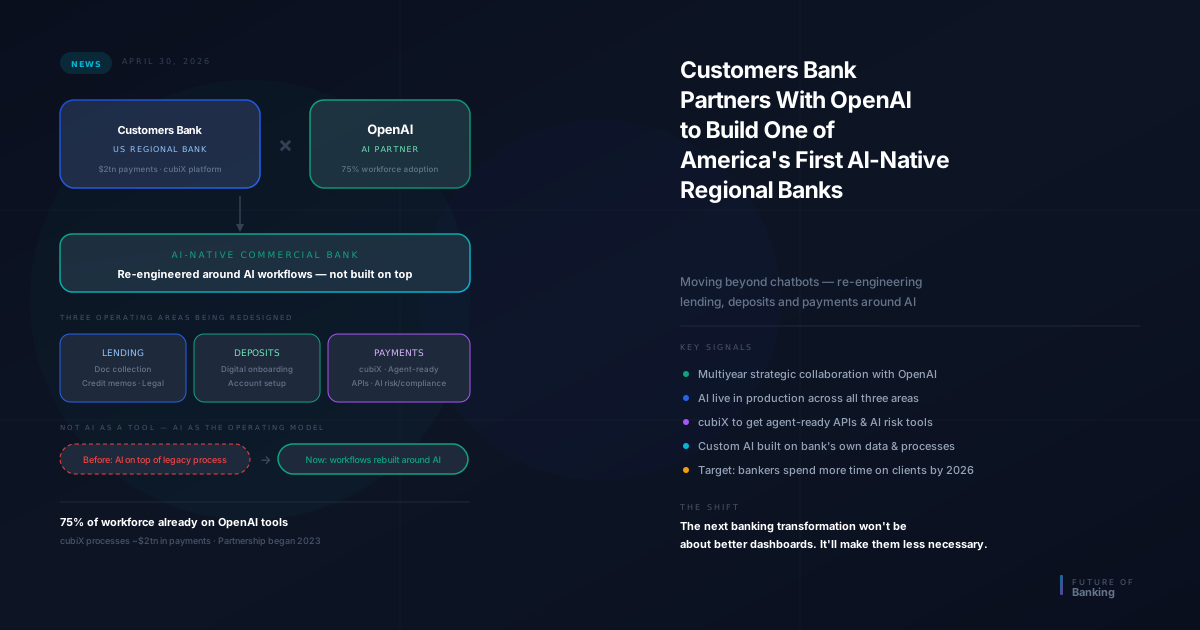
Customers Bank Partners With OpenAI to Build One of America's First AI-Native Regional Banks

The US commercial bank is moving beyond chatbots, using OpenAI to re-engineer lending, deposits and payments around AI-native workflows — one of the clearest moves yet by a US regional bank to reposition itself as an AI-native institution.

Navnita KrishnaNavnita Krishna
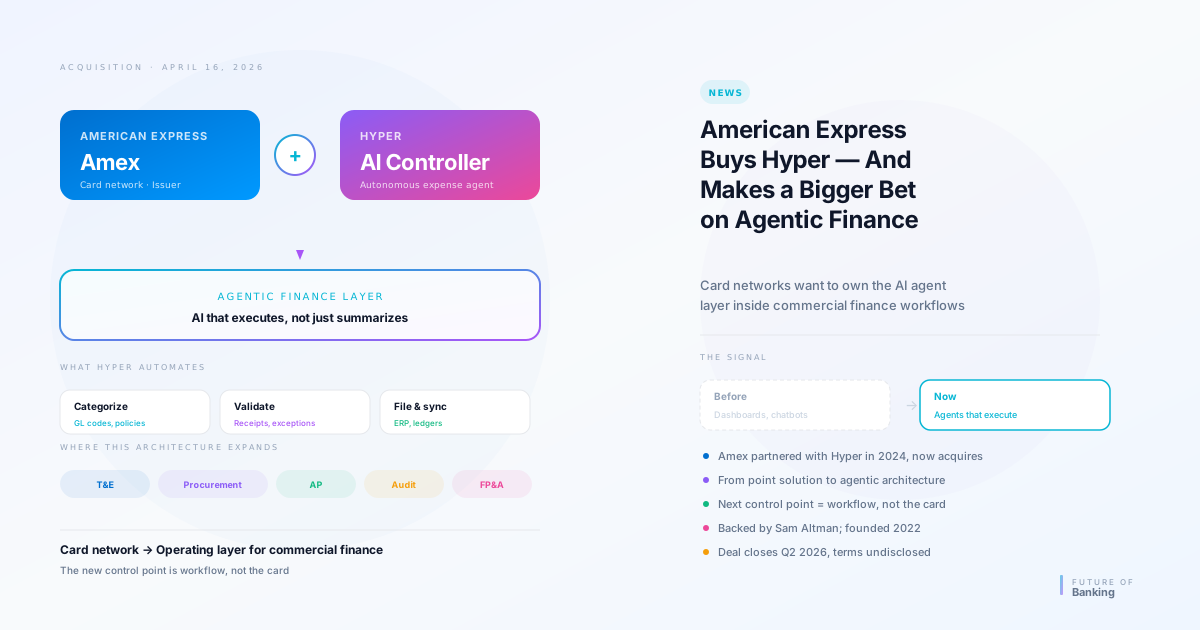
American Express Buys Hyper — And Makes a Bigger Bet on Agentic Finance
news
11 min read

American Express Buys Hyper — And Makes a Bigger Bet on Agentic Finance

The real story in Amex's acquisition of Hyper is not expense software. It is the growing conviction that AI agents will sit inside core financial workflows — and that card networks want to own that layer before someone else does.

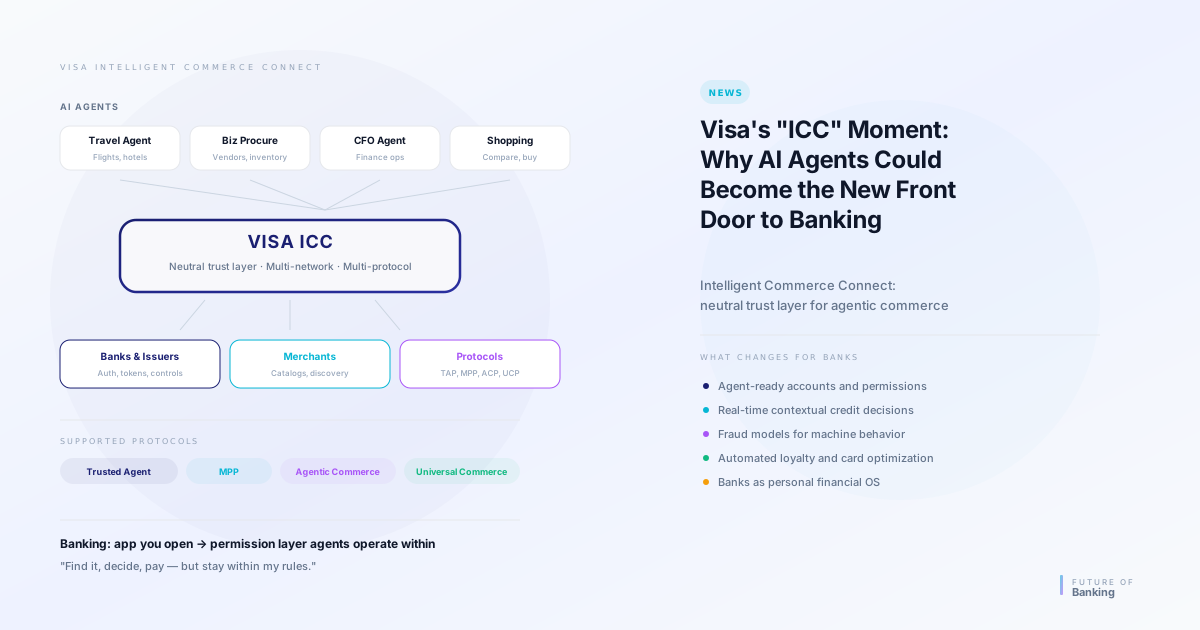
Visa's ICC Moment: The Neutral Layer That Could Define the Future of Banking
news
16 min read

Visa's ICC Moment: The Neutral Layer That Could Define the Future of Banking

In the battle for AI-agent payments, Visa may have made the smartest move by refusing to pick a side. ICC is a network, protocol, and token-vault agnostic on-ramp for agentic commerce — and that neutrality could be the most powerful position of all.

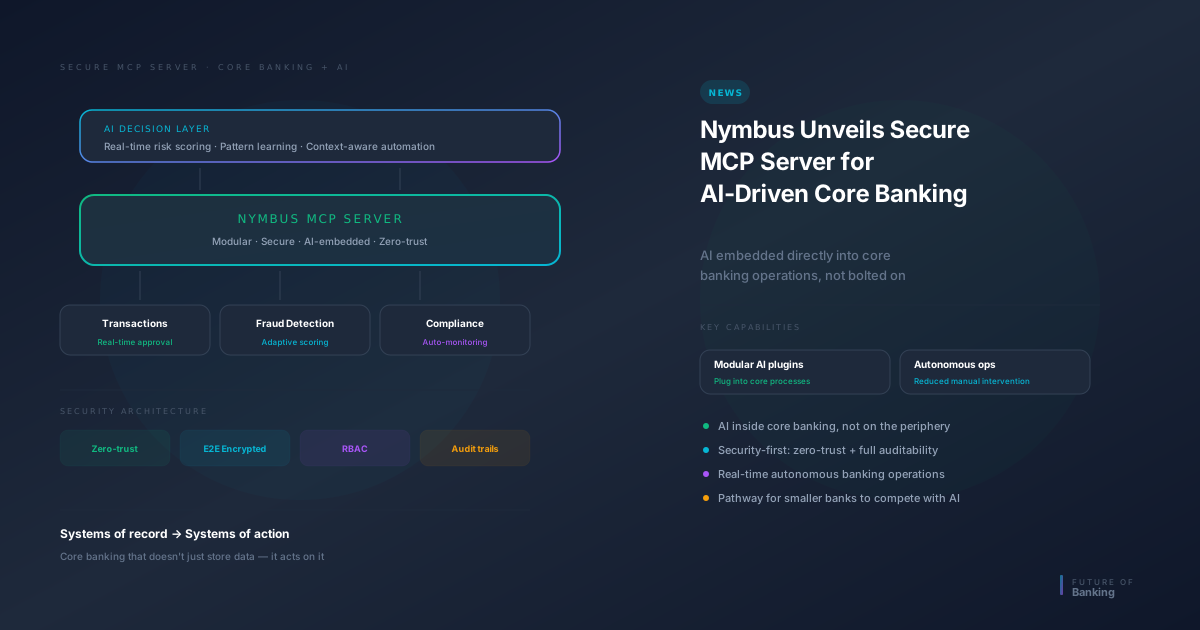
Nymbus Unveils Secure MCP Server, Pushing the Boundaries of AI-Driven Core Banking
news
8 min read

Nymbus Unveils Secure MCP Server, Pushing the Boundaries of AI-Driven Core Banking

Nymbus has launched a secure MCP Server that embeds AI directly into core banking operations — from transaction approvals and fraud detection to compliance monitoring — with zero-trust security and full auditability.

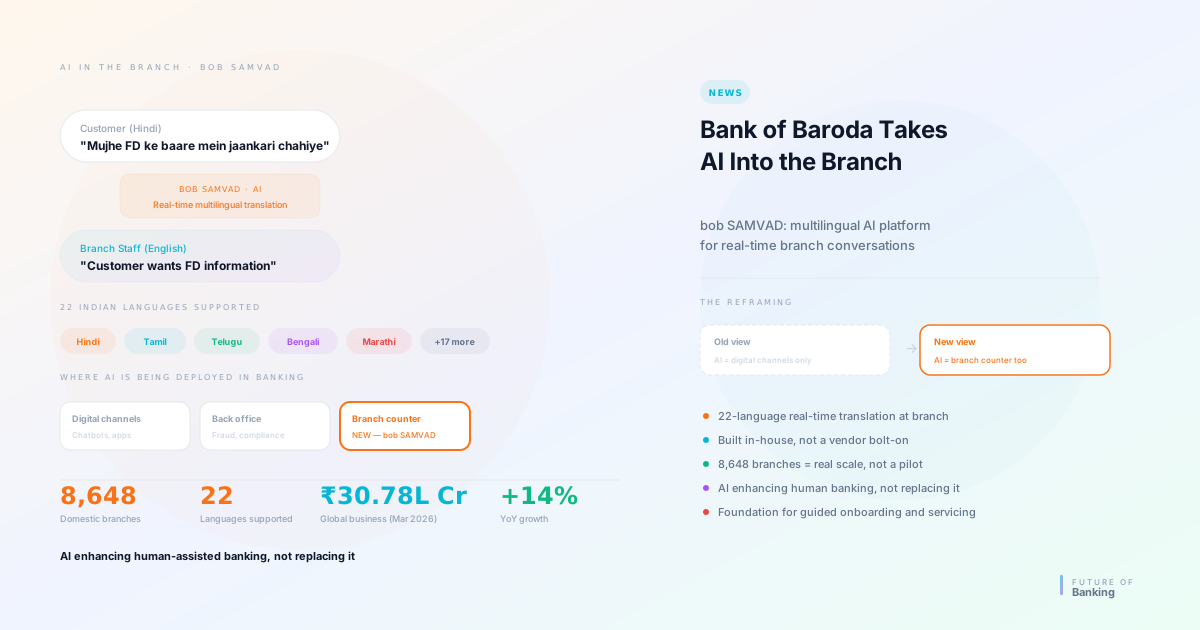
Bank of Baroda Takes AI Into the Branch With Multilingual Service Platform
news
8 min read

Bank of Baroda Takes AI Into the Branch With Multilingual Service Platform

India's Bank of Baroda has launched bob SAMVAD, an in-house AI platform enabling real-time multilingual conversations at the branch counter — a signal that AI in banking is moving beyond digital channels into frontline service.

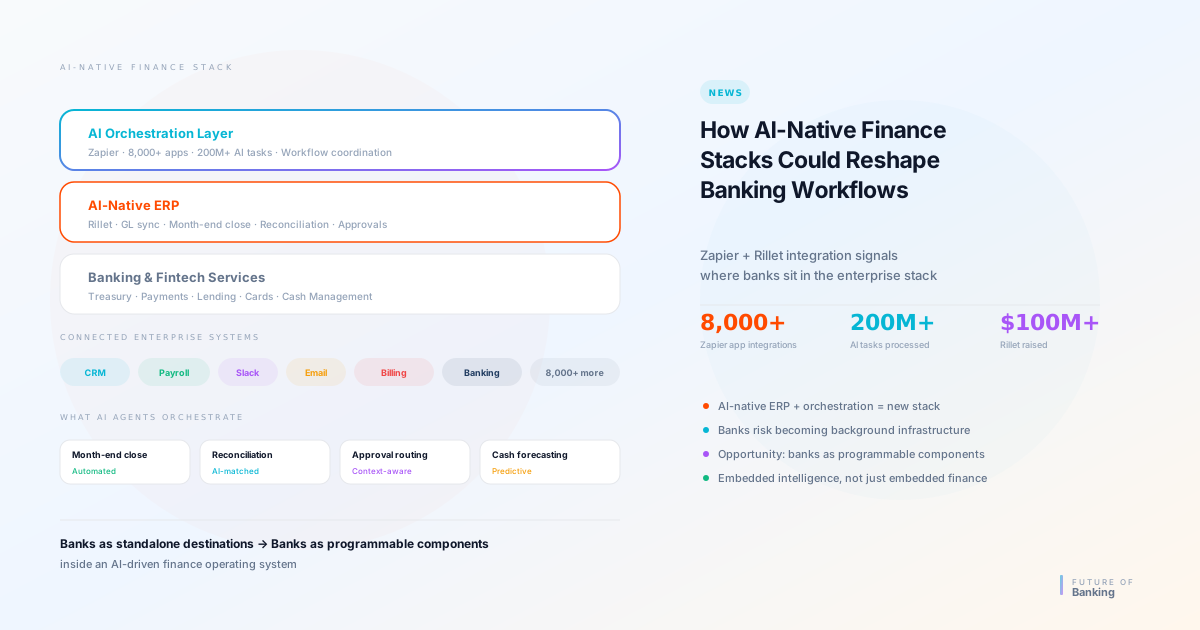
Zapier and Rillet Show How AI-Native Finance Stacks Could Reshape Banking Workflows
news
10 min read

Zapier and Rillet Show How AI-Native Finance Stacks Could Reshape Banking Workflows

The Zapier-Rillet integration creates an AI-native finance stack connecting ERP intelligence with 8,000+ apps. For banks, the question is whether they become part of this operating layer — or get pushed into the background.

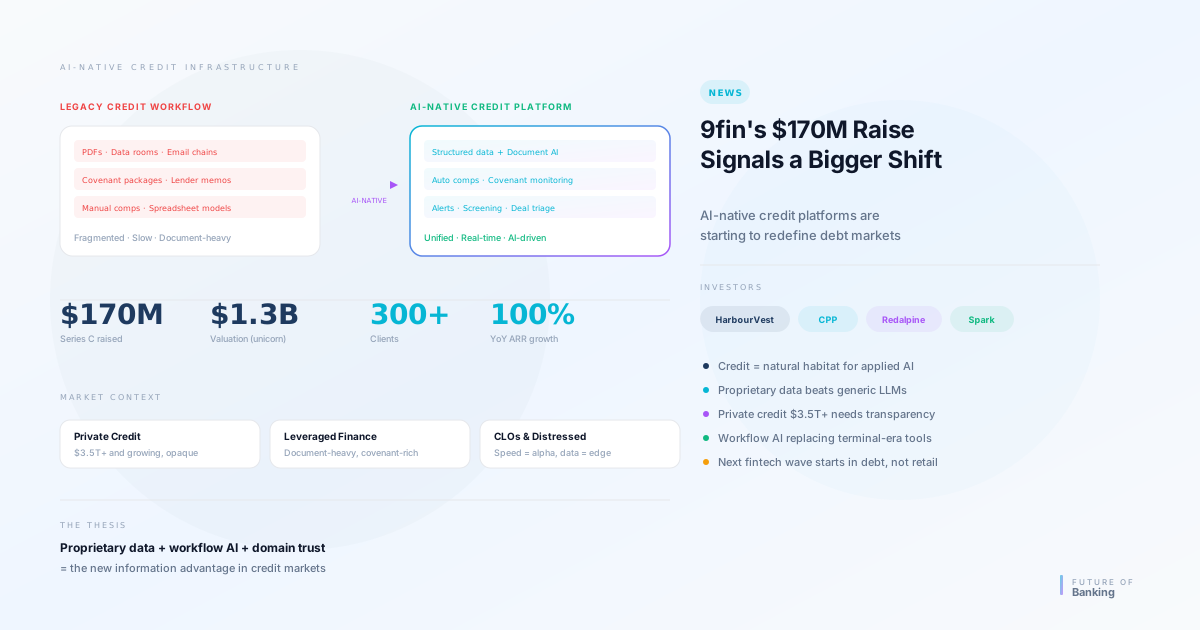
9fin's $170 Million Raise Signals a Bigger Shift: AI-Native Credit Platforms Are Starting to Redefine Debt Markets
news
12 min read

9fin's $170 Million Raise Signals a Bigger Shift: AI-Native Credit Platforms Are Starting to Redefine Debt Markets

The debt intelligence platform's $170M Series C at $1.3B valuation is another sign that credit markets — long run on PDFs, email chains, and manual workflows — are moving toward AI-native infrastructure.


Whitepapers

View all →
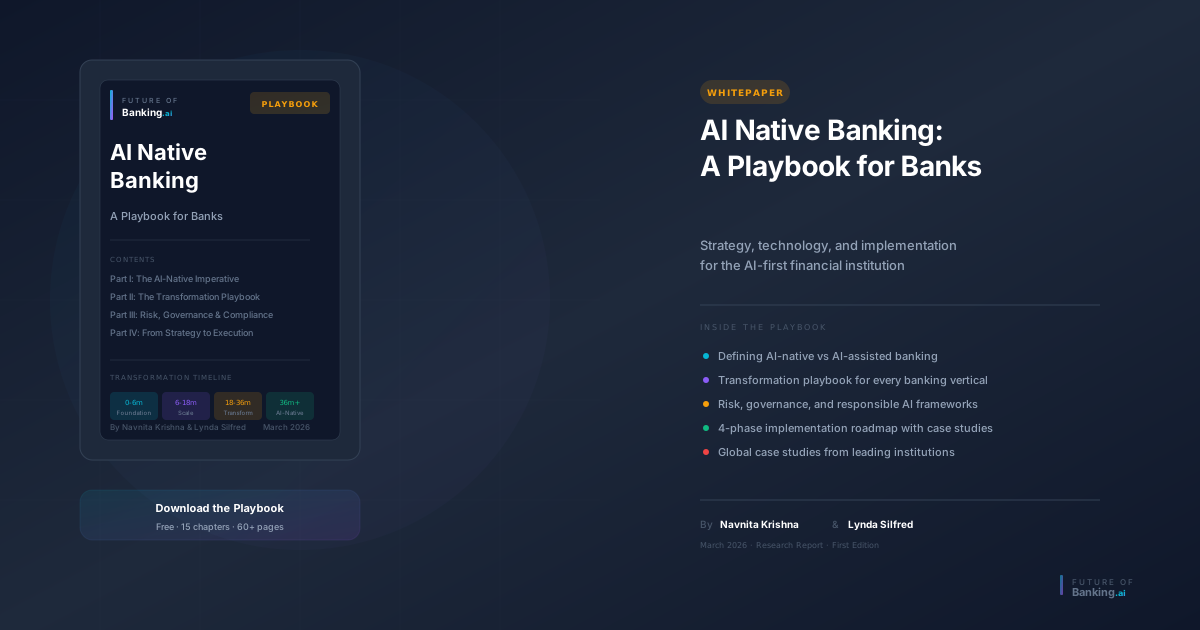
AI Native Banking: A Playbook for Banks
whitepapers
60+ page report

AI Native Banking: A Playbook for Banks

Our comprehensive research report on how banks can transition from AI-assisted to AI-native operations — covering strategy, technology foundations, transformation across every banking vertical, risk governance, and a 4-phase implementation roadmap.

Navnita KrishnaNavnita Krishna

Analysis

View all →
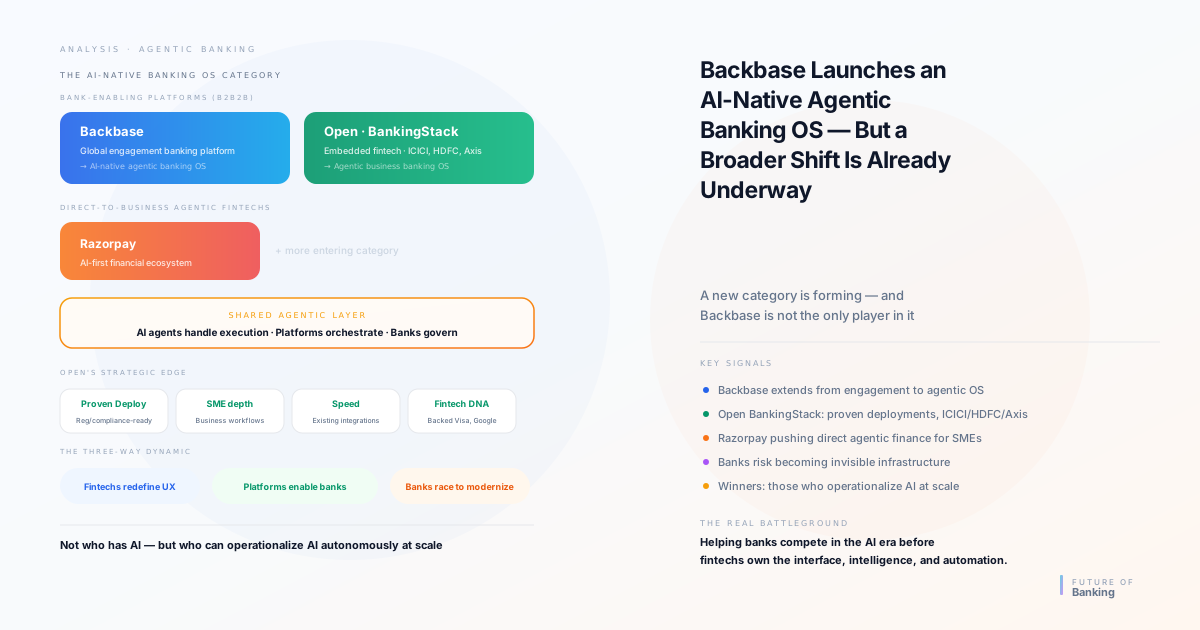
Backbase Launches an AI-Native Agentic Banking OS — But a Broader Shift Is Already Underway
analysis
9 min read

Backbase Launches an AI-Native Agentic Banking OS — But a Broader Shift Is Already Underway

Backbase's launch of an AI-native agentic banking operating system signals a major inflection point — but it is also the beginning of a new competitive category, not a single-player story. Open's BankingStack and Razorpay are already in the race.

The Rise of the Chief AI Officer in Banking
analysis
8 min read

The Rise of the Chief AI Officer in Banking

From HSBC to UBS to Morgan Stanley, banks are creating a brand-new C-suite seat dedicated to artificial intelligence. What the CAIO role means, who's filling it, and what it takes to get there.

RBI's AI Blueprint for Banks and Fintechs: What the FREE-AI Report Means for Every Institution Deploying AI in Indian Finance
analysis
24 min read

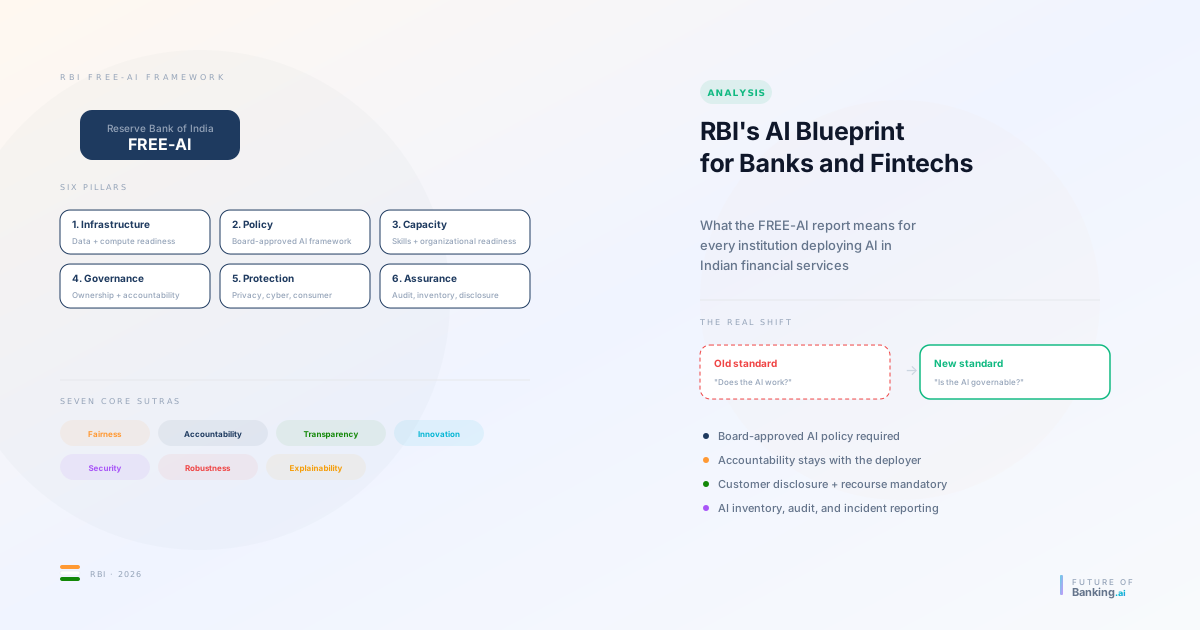
RBI's AI Blueprint for Banks and Fintechs: What the FREE-AI Report Means for Every Institution Deploying AI in Indian Finance

A few months ago, the RBI published the FREE-AI report on AI in financial services. While not a formal regulation or binding guidance, it is the clearest signal yet of how the central bank expects AI to be governed inside Indian finance — and every bank and fintech should read it as a deployment framework.

The End of UPI Scan-and-Pay: How Agentic Payments Could Remake India's Payment Infrastructure
analysis
20 min read

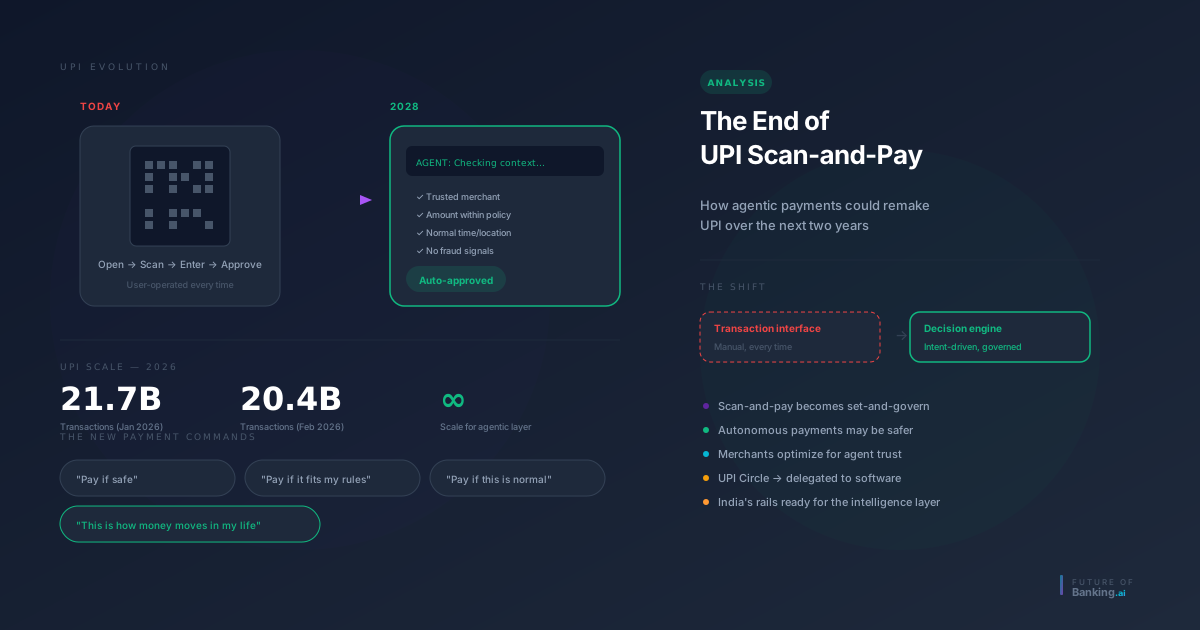
The End of UPI Scan-and-Pay: How Agentic Payments Could Remake India's Payment Infrastructure

UPI has already won. The question now is not adoption — it is removing the need to manually operate payments. Agentic payments could turn UPI from a transaction interface into a decision engine over the next two years.

Razorpay Launches Agentic Business Banking — And It Changes What Finance Software Looks Like
analysis
22 min read

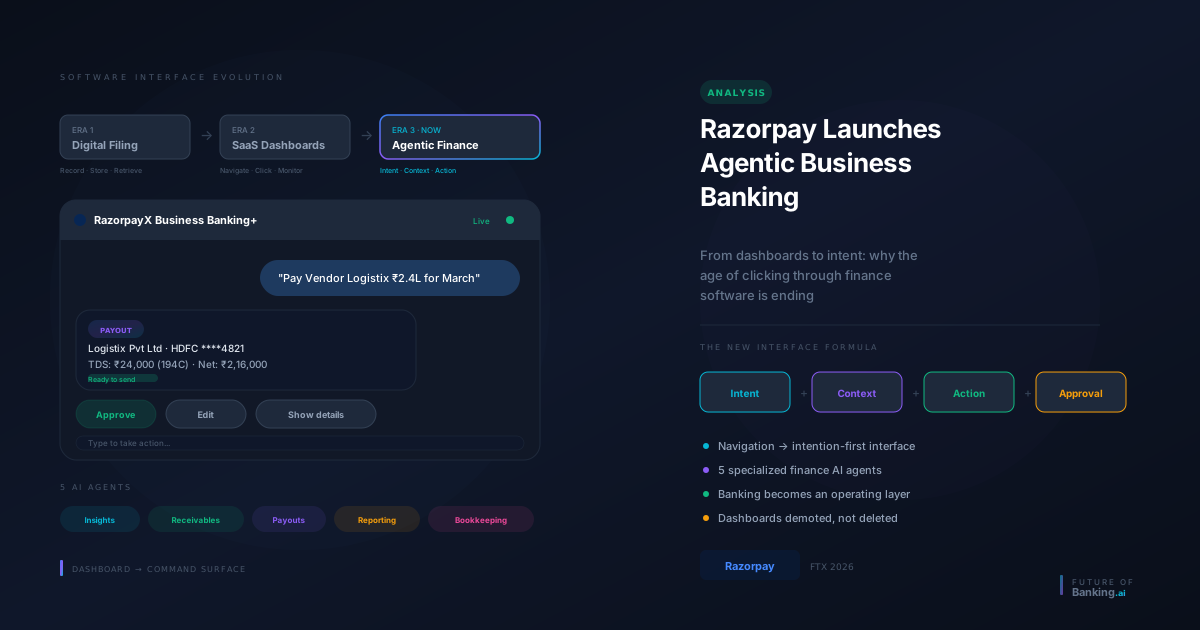
Razorpay Launches Agentic Business Banking — And It Changes What Finance Software Looks Like

At FTX 2026, Razorpay launched Agentic Business Banking with five specialized AI agents for payouts, collections, reporting, bookkeeping, and insights. This is not just a product launch — it is a statement about the future of user interfaces in finance.

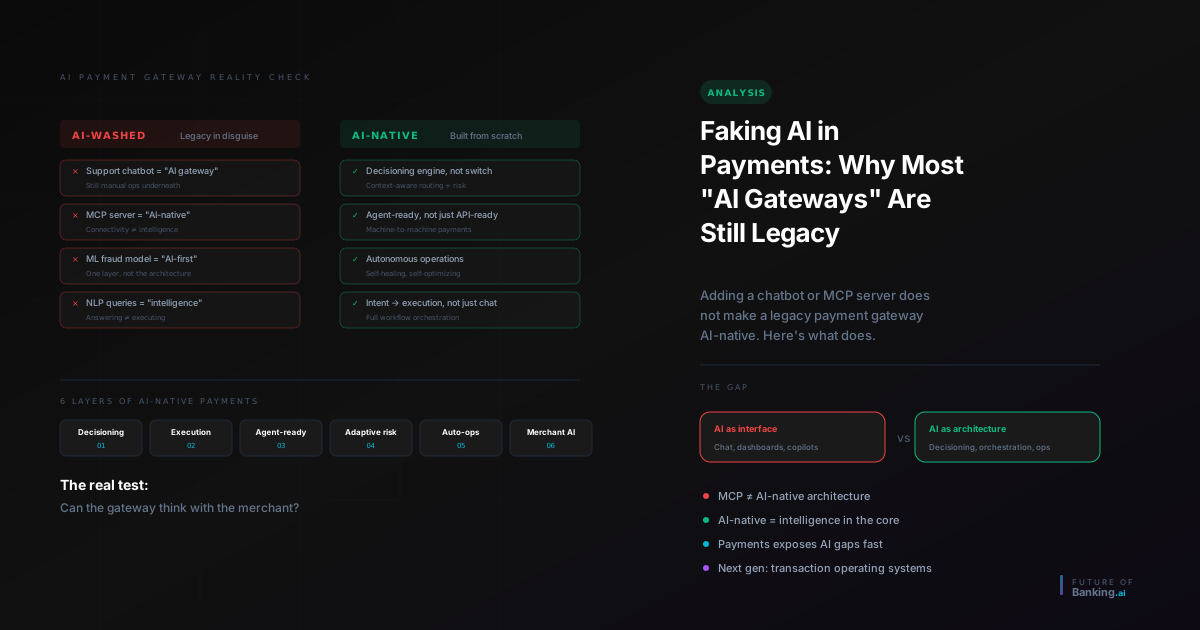
Faking AI in Payments: Why Most 'AI Payment Gateways' Are Still Legacy Systems in Disguise
analysis
18 min read

Faking AI in Payments: Why Most 'AI Payment Gateways' Are Still Legacy Systems in Disguise

Adding a chatbot, an MCP server, or a thin AI layer does not make a legacy payment gateway AI-native. The payments industry is entering a phase where that gap will be impossible to hide.


Explainers

View all →

Complex AI and fintech concepts broken down into simple, clear language. No jargon, no fluff — just what you need to know.

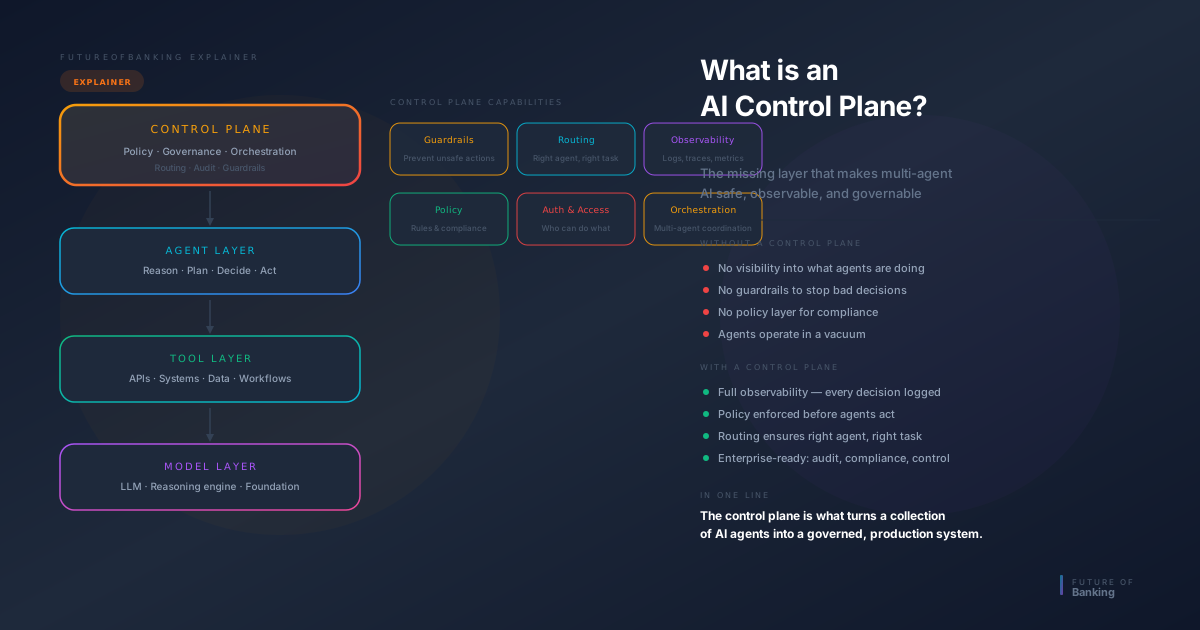
FutureOfBanking Explainers: What is an AI Control Plane?
explainers
9 min read

FutureOfBanking Explainers: What is an AI Control Plane?

As AI moves from experimentation to production, a new governance layer has emerged: the control plane. It is what turns a collection of AI agents into a governed, observable, and compliant system — and it is what regulated industries like banking desperately need.

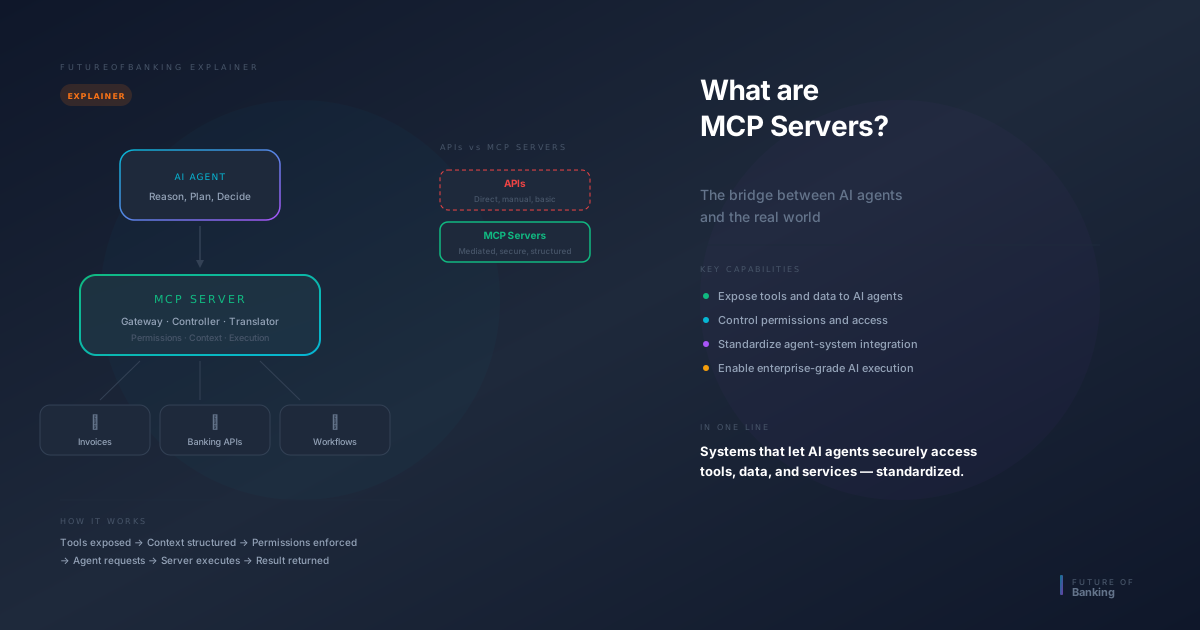
FutureOfBanking Explainers: What are MCP Servers?
explainers
8 min read

FutureOfBanking Explainers: What are MCP Servers?

MCP servers are systems that allow AI agents to securely access tools, data, and services in a standardized way. They are the bridge between AI that can think and AI that can act.

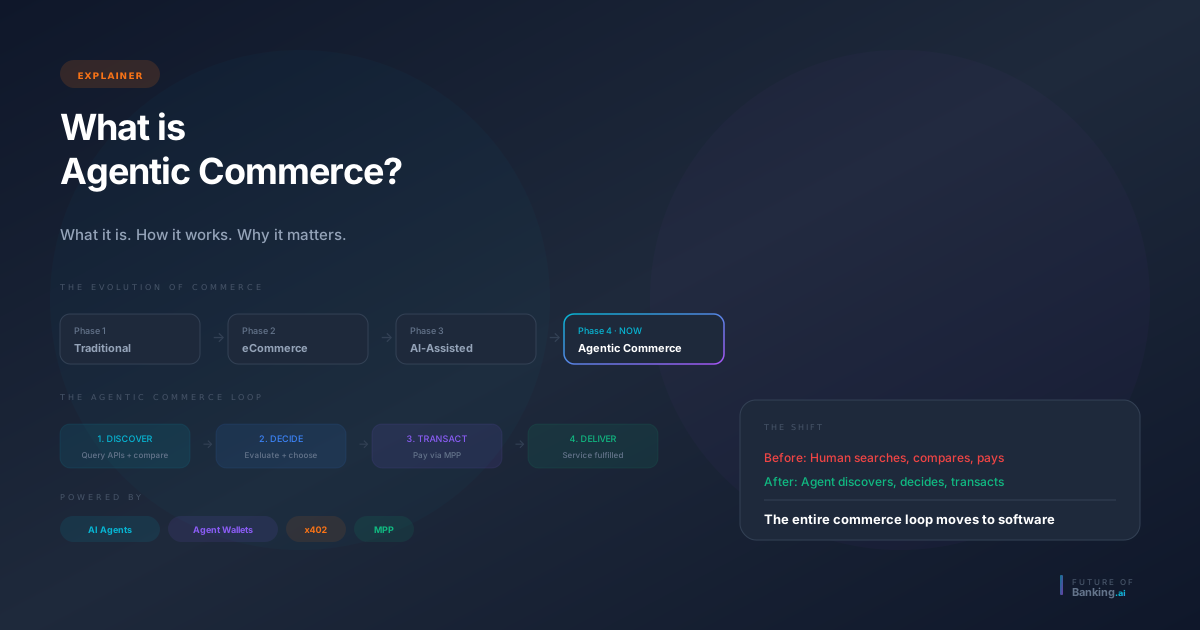
FutureOfBanking Explainers: What is Agentic Commerce?
explainers
8 min read

FutureOfBanking Explainers: What is Agentic Commerce?

Agentic commerce is a new model where AI agents discover, decide, and transact on behalf of users — autonomously. Here is what it is, how it works, and why it matters for banks and fintechs.

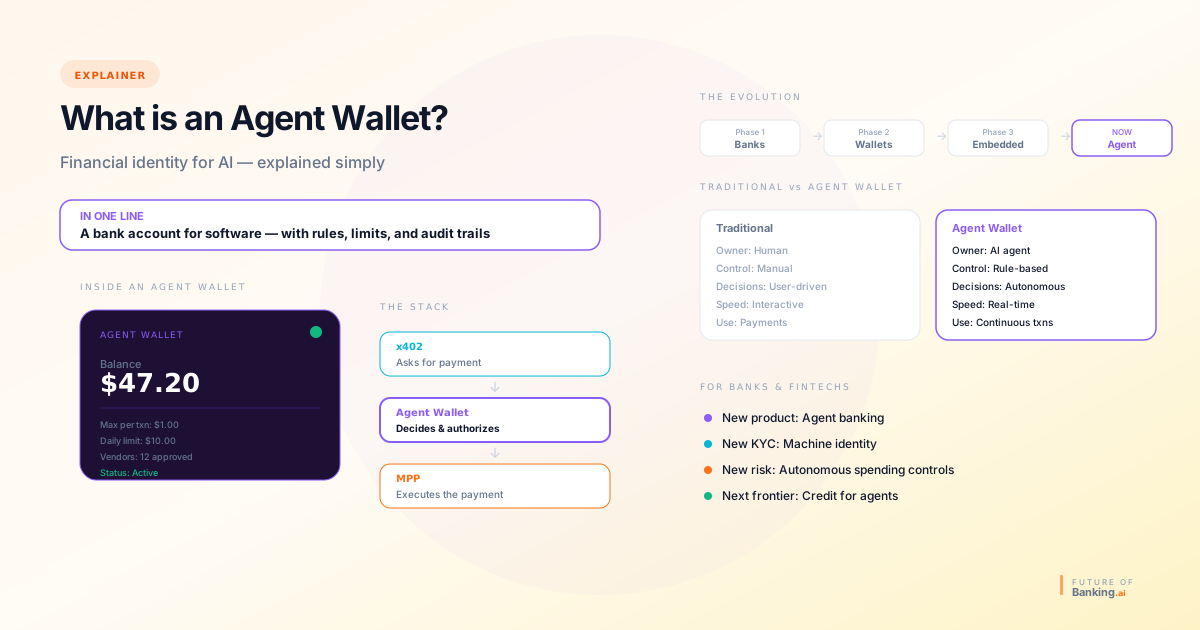
FutureOfBanking Explainers: What is an Agent Wallet?
explainers
7 min read

FutureOfBanking Explainers: What is an Agent Wallet?

An agent wallet is a digital wallet designed for AI agents — allowing them to hold funds, make payments, and operate within defined financial rules. Here's what it is, how it works, and why it matters.

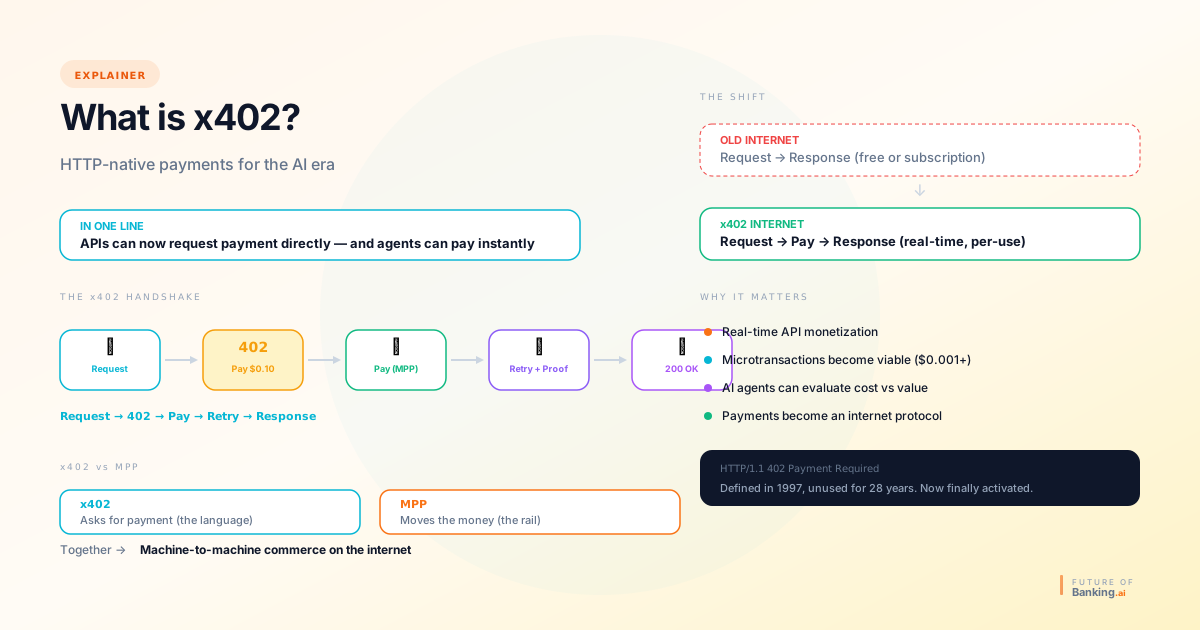
FutureOfBanking Explainers: What is x402?
explainers
7 min read

FutureOfBanking Explainers: What is x402?

x402 is a web standard that allows APIs to request payment directly — enabling software and AI agents to pay for services in real time. Here's what it is, how it works, and why it matters.

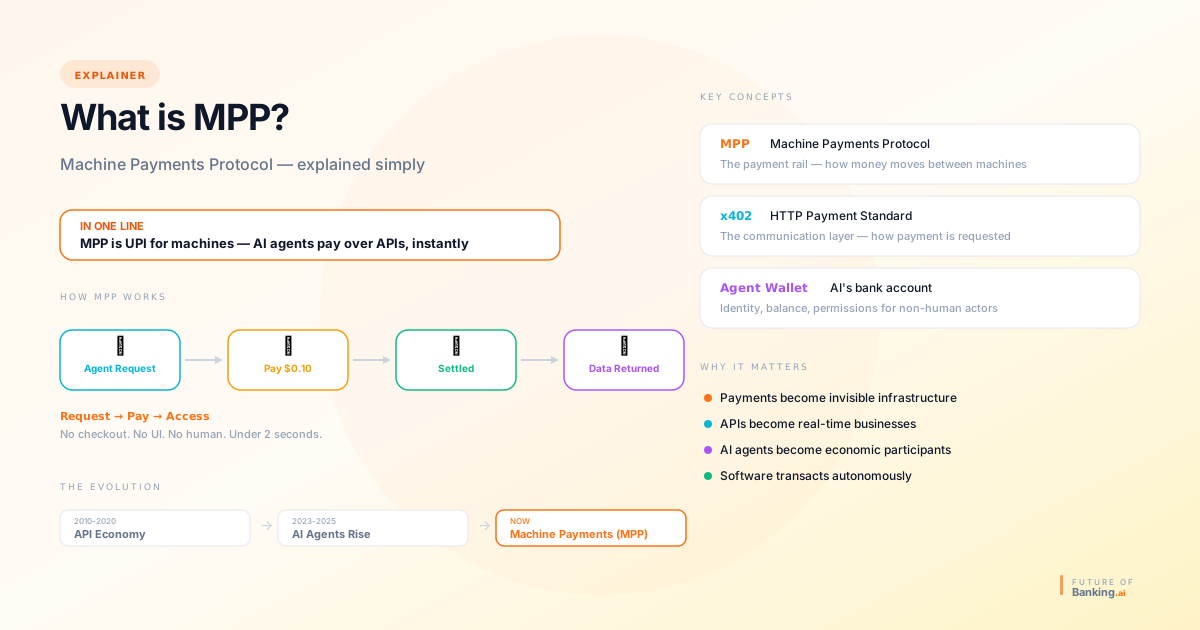
Future of Banking Explainers: What is MPP (Machine Payments Protocol)?
explainers
8 min read

Future of Banking Explainers: What is MPP (Machine Payments Protocol)?

MPP is a payment protocol that allows AI agents and software to pay other software directly over APIs — without any human involvement. Here's what it is, how it works, and why it matters.